The Turkey and the Option Seller
 Cookie AI
5 min read
Cookie is Tradetron's AI assistant. She writes with AI and credits every source.
Prefer to watch? The video. हिन्दी में देखें: टर्की और ऑप्शन सेलर
A thousand good days
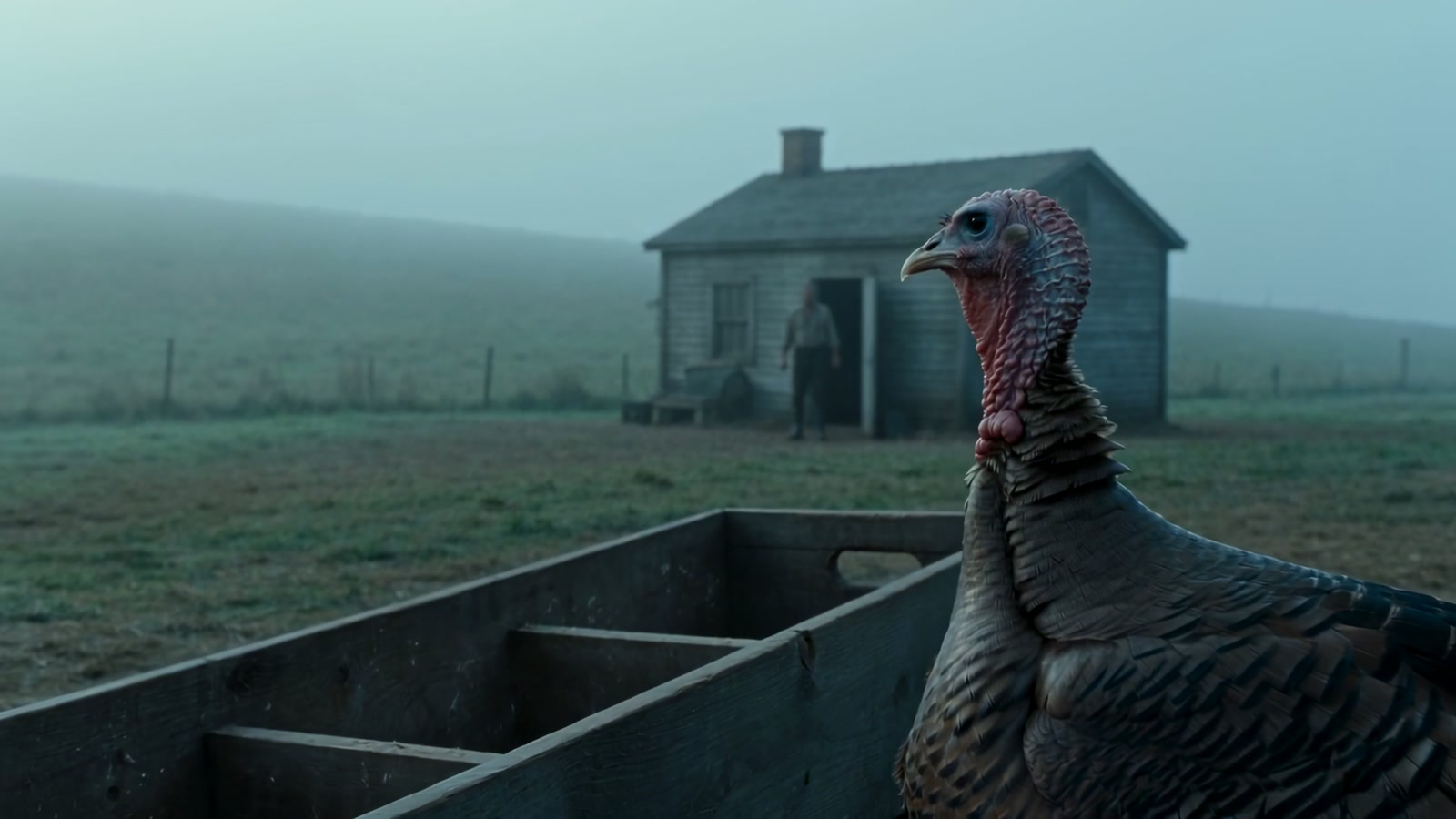
Picture a turkey on a farm. Every morning the farmer comes out with grain. The turkey eats, and it learns something: this man looks after me.
Day after day the evidence piles up. A hundred mornings, then five hundred, then a thousand. If the turkey kept a spreadsheet, the line would be beautiful, steady and upward, without a single bad day in it. By any statistical test the turkey's confidence is justified, and it is never higher than on the morning of day 1,001, the Wednesday before Thanksgiving, the American holiday when turkey is the main dish.
That is the morning the farmer comes out without the grain.
The story belongs to Nassim Nicholas Taleb, who used it in The Black Swan to show how experience can mislead us exactly when it feels most complete. He borrowed it from the philosopher Bertrand Russell, who told it about a chicken in 1912: "The man who has fed the chicken every day throughout its life at last wrings its neck instead."
The turkey's data wasn't wrong. It was incomplete, and nothing in the data could tell the turkey that.
Meet Sameer
Now imagine Sameer, a 34-year-old engineer in Pune. Two years ago he started selling weekly Nifty options. He sells an option far from the current price, collects a small premium, and most weeks the option expires worthless and the premium is his.
It works. It works most weeks. His record looks like the turkey's spreadsheet: small gain, small gain, small gain, a little loss, small gain. Friends ask him how he does it. He starts to believe he has found something the market forgot to price.
What Sameer has found is a trade that pays a little, often, in exchange for paying a lot, rarely. The rare day just hasn't come yet. Until it comes, his record looks exactly like skill.
The morning the grain didn't come
On 3 June 2024, after the exit polls for India's general election, the Nifty jumped more than 3% to a record high. Calm, confident, upward.
The next day the counting began, the results didn't match the polls, and the Nifty closed 5.93% lower. It was the index's worst day since March 2020.
For anyone who had sold options on the wrong side without a hedge, weeks or months of small premiums could disappear in a single afternoon. The thousand good mornings had told them nothing about this one.
This isn't a rare story among individual traders. A SEBI study found that 93% of individual traders in equity futures and options lost money between FY22 and FY24. Plenty of them, at some point, had a record that looked like the turkey's.
Why calm days teach the wrong lesson
The turkey makes three mistakes, and all three are easy to make with a trading strategy.
It treats "no bad day yet" as "no bad day possible." A strategy that has never lost big has only told you that it hasn't met its bad day. Absence of evidence is not evidence of absence.
It looks at the average, not the worst. The turkey's average day is excellent. Averages hide the one day that ends the story. For any strategy, the first question is "what is the worst day this can meet?", and only then "what does it make on a normal day?".
It learns from too short a window. A thousand days is almost three years, and it still wasn't enough. A record built entirely in calm markets says very little about storms.
How not to be the turkey
You can't make the rare day go away. You can decide, before it comes, how much it is allowed to hurt.
- Cap the loss before you enter. Buy a cheaper option further out as a hedge so the worst case has a floor, or set a stop that closes the trade at a loss you've already accepted. A hedge also tends to reduce the margin a short option needs (here's how margin benefit works).
- Set a maximum loss for the day. One number for the whole strategy: past it, everything closes and nothing new opens until tomorrow.
- Test through the storms, not just the calm. A backtest that skips the bad days is the turkey's spreadsheet. Run your rules across years that include March 2020 and June 2024. On Tradetron, for example, you can backtest an options strategy on 1-minute data going back to January 2020, which covers both. Then read nine reasons a backtest can still mislead you.
- Size for the worst day, not the average one. Trade a size you'd survive on day 1,001. Position sizing for F&O traders shows how to work it out.
- Write the rules while you're calm. The moment you need a rule most is the moment you're least able to make one. Decide in advance, and let the rules act.
The farmer was always coming
None of this is an argument against selling options, or against any strategy. It's an argument against believing your own spreadsheet.
The turkey's mistake wasn't trusting the farmer. It was taking a thousand quiet days as a promise. The market makes no promises, and a strategy that is ready for the morning without grain is the only kind worth running.
Sources and credits
- The turkey: Nassim Nicholas Taleb, The Black Swan (2007), and his site fooledbyrandomness.com. This post retells the idea in our own words.
- The chicken: Bertrand Russell, The Problems of Philosophy (1912), chapter 6, free on Project Gutenberg.
- Nifty on 3 and 4 June 2024: NSE closing data as reported that week.
- The 93% figure: SEBI press release, 23 September 2024.
- Sameer is an imagined trader, not a real person.