The Idea Is the Last Moat
Prefer to watch? The whole story in 2 minutes. हिन्दी में देखें: आइडिया ही आख़िरी किला है, 2 मिनट की कहानी
Why would a stranger pay you?
Here is a question most of us never ask: why would a stranger give you money?
Not a loan, not a gift. Money, in exchange for something you did.
Strip away the banks, the apps and the salary slips, and money turns out to be a simple thing. It is a receipt. It records that you gave another person something they wanted more than the money in their pocket: a shirt, a fixed tap, an answer, an hour of their life back. Every rupee you have ever earned is proof that, at some point, you made someone else's life a little better by their own judgment.
That framing matters, because it tells you what you have to keep doing to stay valuable. Not working hard. Not being busy. Creating something another person would rather have than their money.
The rule we all grew up with
For as long as anyone can remember, there was one rule about how that value gets created: ideas are cheap, execution is everything.
It was a good rule. A thousand people in a city might have had the idea for a better restaurant, a faster delivery service or a trading system that cut losses earlier. Almost none of them built it. Building took money, skills, months of evenings and a tolerance for things going wrong. The few who pushed through got paid, and the idea people got a story about what might have been.
So we learned to respect execution and shrug at ideas. That rule is now breaking.
What a chess tournament in 2005 told us
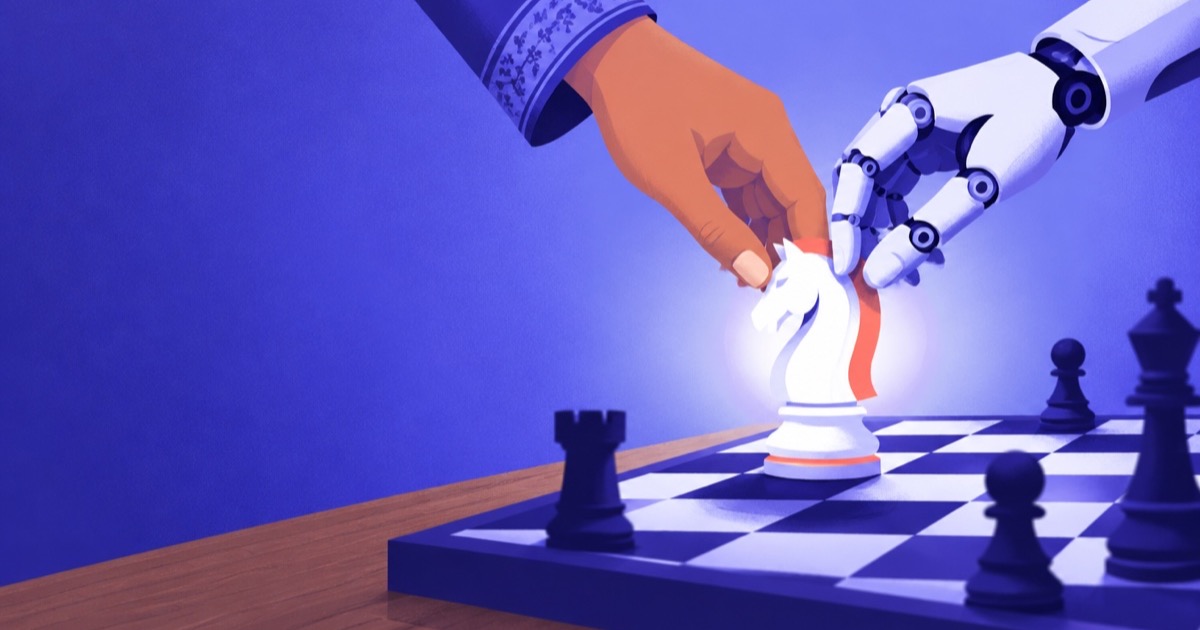
In June 2005, an online chess site ran an unusual tournament. Anything was allowed. Players could enter alone, enter as a chess engine, or enter as a human working alongside computers.
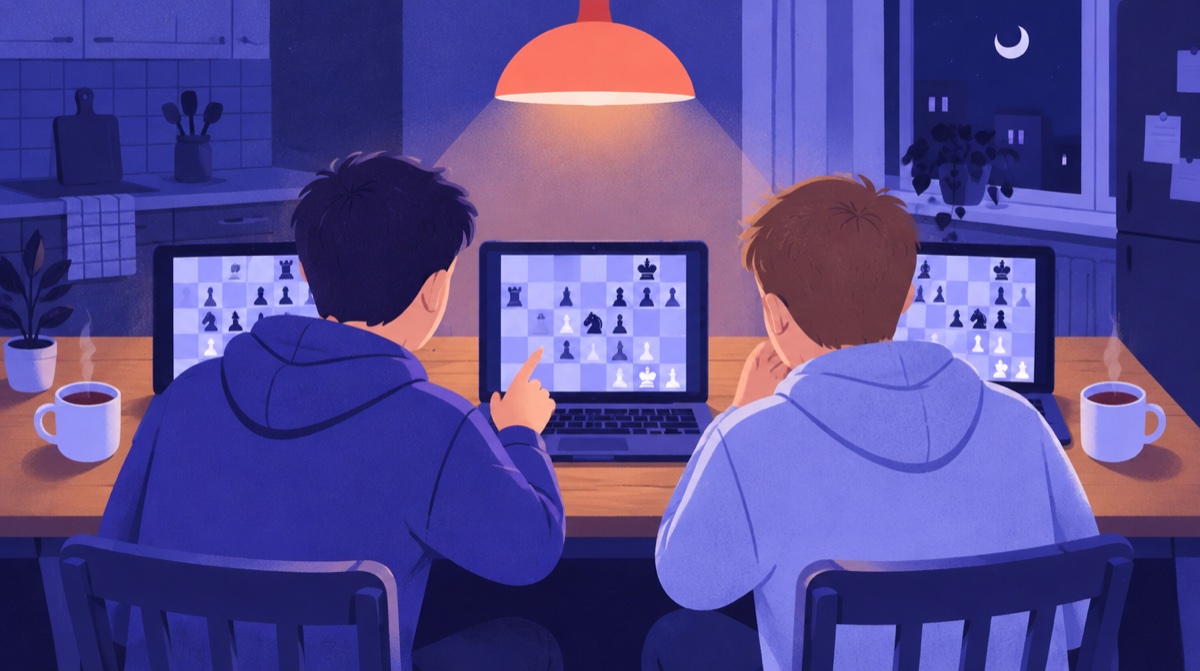 Illustration: two amateurs, three ordinary computers
Everyone expected a grandmaster with a powerful computer to win. The winners turned out to be two amateur players from New Hampshire running three ordinary computers at once. They were not the strongest players in the field, and they did not have the strongest machine. What they had was a process: they knew when to follow the engines, when the engines disagreed, and when a human hunch was worth more than the calculation.
Garry Kasparov later drew the lesson from it: a weaker human with a machine and a better process beat both a strong computer alone and a strong human with a machine but a worse process.
Building is cheap. Judgment isn't.
Twenty years later, that tournament describes everyday work.
AI can now write the code, draft the page, design the logo and build the spreadsheet. In the digital world, the cost of turning an idea into a working thing has collapsed. What once took a team and a quarter can take one person and an afternoon.
Take trading. Not long ago, turning a market idea into a running strategy meant learning to code, wiring up a broker and losing weekends to bugs. Today you can describe your rules in plain English to an AI assistant connected to Tradetron, and have the strategy built and backtested in an evening (here is how that works).
That is wonderful, and it is also a trap. When anyone can build ten strategies before dinner, building proves nothing. The hard work moves to the questions the machine cannot answer for you. Is this idea actually any good? Does it hold up outside the period I tested it on (nine reasons it might not)? Do I have the discipline to keep running it through a bad month?
Execution has not become worthless. It has become cheap. And when something becomes cheap, value moves to whatever is still scarce: the idea, and the judgment to know which idea deserves to run.
Where your edge comes from
If ideas are now what matter, where do good ones come from?
Mostly from where you stand. Imagine a cloth merchant in Surat who has watched cotton prices move for twenty years, or a nurse who sees the same scheduling mess every single night. Each of them sees something nobody else sees, because nobody else has stood in exactly that spot. Their idea is not a flash of genius. It is the overlap of their particular experiences, which no one else has.
That overlap is your moat. A machine can execute any idea you give it, but it cannot stand where you stand.
The partnership is the point
Refusing to use AI today is a little like refusing electricity in 1925. You can do it, and you can even be proud of it, but you will be competing with people who have ten times your output for the same effort. And this shift will not stay on screens for long. The same pattern is heading into factories, farms and workshops, sooner than most people expect.
The answer is not to out-work the machine. Nobody wins that race. The answer is the one those two amateurs found in 2005: bring what only you have, let the machine do what it does best, and get very good at the space between.
The people who stay valuable won't be the ones who compete with the machine. They'll be the ones who think with it.