How to Backtest an Iron Condor on Nifty Weekly Options (No Code)
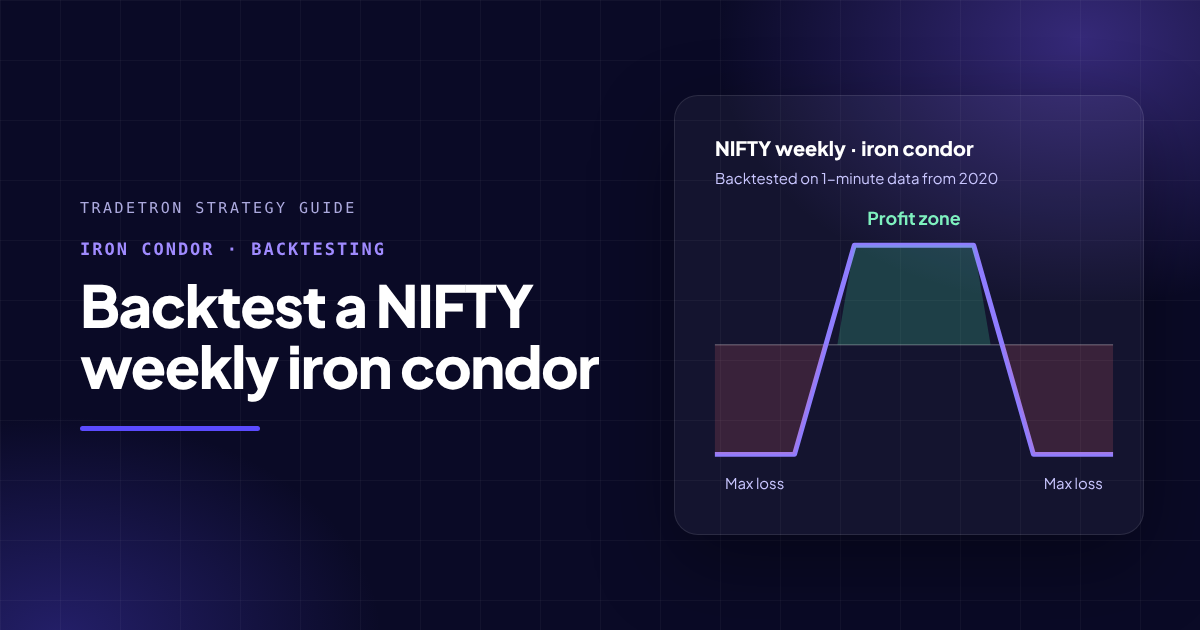
An iron condor sells an out-of-the-money call and put and buys a further call and put as protection. Its result depends on small details: which strikes, what time you enter, when you exit and how stops work. A backtest on minute-level option prices shows how those exact rules behaved in the past, before you put money on them.
This guide shows how to do that on Tradetron without code.
What you need to decide first
Write these down before you open any tool. A backtest is only as good as the rules you give it.
| Rule | Example |
|---|---|
| Underlying and expiry | Nifty, current weekly expiry |
| Entry time | 9:30 am |
| Short strikes | Call and put about 300 points from the spot price, or a set delta |
| Wings (protection) | 200 points beyond each short strike |
| Exit time | 3:15 pm on expiry day, or same day for an intraday version |
| Stop loss | Per leg, or on the combined premium |
| Target | Optional, on the combined premium |
| Lots | 1 lot to start (Nifty lot size is 65) |
Step 1: Build the four legs
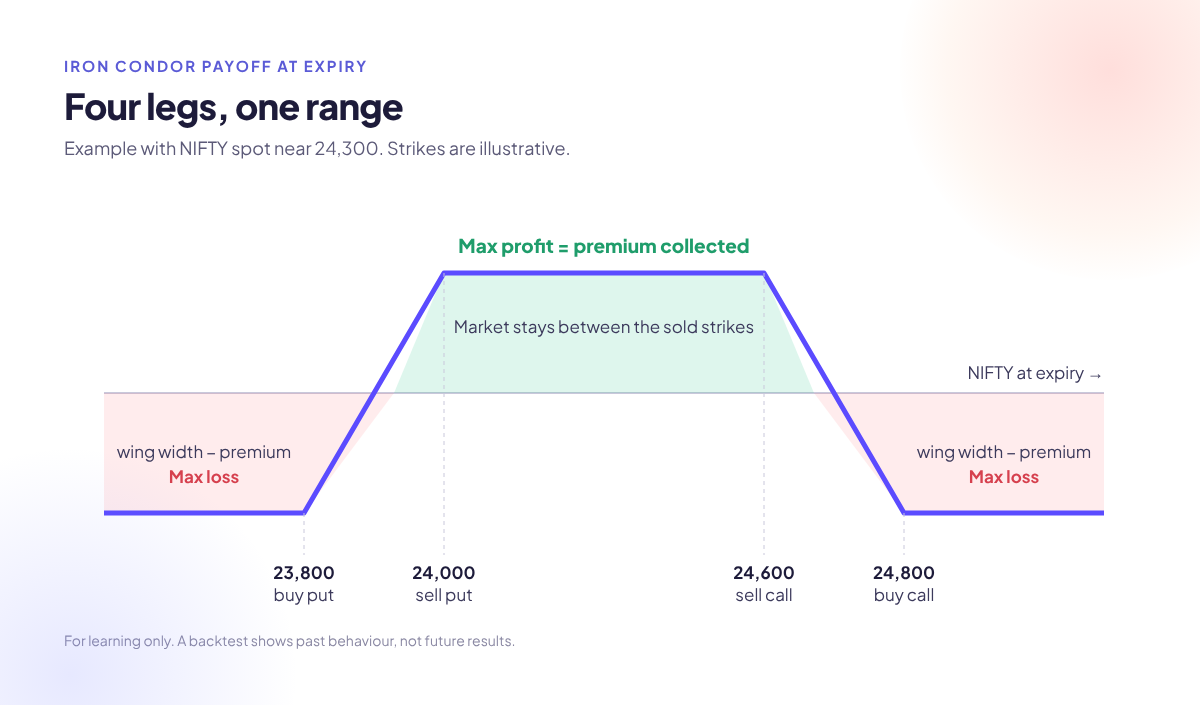
Open the Option Wizard on Tradetron and choose the iron condor template, or add four legs yourself in the strategy builder:
- Sell 1 out-of-the-money call
- Buy 1 call further out
- Sell 1 out-of-the-money put
- Buy 1 put further out
Pick strikes by distance from the spot price, by premium, or by delta. Set Nifty and the current weekly expiry. Nifty weekly options now expire on Tuesdays.
Step 2: Add entry, exit and stops
Set the entry time and the exit time. Then add your stop loss and target, either on each leg or on the combined position. If you want the stop to move as the trade goes your way, add a trailing stop in the same exit settings.
Step 3: Run the backtest
Pick the period and run it. Tradetron backtests Nifty options on 1-minute historical data from January 2020. NSE data is available up to about 35 days before today. Use a long period that includes calm and volatile months, such as 2020's crash, budget days and election results.
Step 4: Read the results honestly
Look past the final profit figure:
- Worst day and worst month. An iron condor wins small most days and can lose much more on a few. Ask yourself if you could live through the worst one.
- Maximum drawdown. The deepest fall from a peak.
- Trade list. Open a few losing days and check the strategy did what you meant.
- Costs. Make sure brokerage and slippage are included. Four legs means four sets of charges.
A backtest shows how rules behaved on past data. It is not a forecast.
Step 5: Test on live prices before real money
Run the same strategy for a few weeks in Live Offline, where it follows live prices and records every trade without sending orders. Then go live with the smallest size.
Frequently asked questions
Can I backtest a Nifty iron condor without coding?
Yes. On Tradetron you build the four legs in the Option Wizard or strategy builder and run the backtest from the same screen. No code is needed.
How far back can I backtest Nifty weekly options?
Tradetron has 1-minute Nifty option data from January 2020, up to about 35 days before today.
Should I set the stop loss per leg or on the whole position?
Both are common. Per-leg stops react to one side being tested; a combined stop looks at the whole position. Backtest both versions over the same period and compare the worst days, not just the total.
Why do my backtest and live results differ?
Live trading has slippage, wider spreads on volatile days and missed fills that a backtest cannot fully copy. Running the strategy in Live Offline for a few weeks shows you the gap before real money is involved.
Is an iron condor safe?
No options strategy is safe. An iron condor has limited loss because of the bought wings, but that loss can still be several times the premium collected. Size it so the worst case is affordable.